

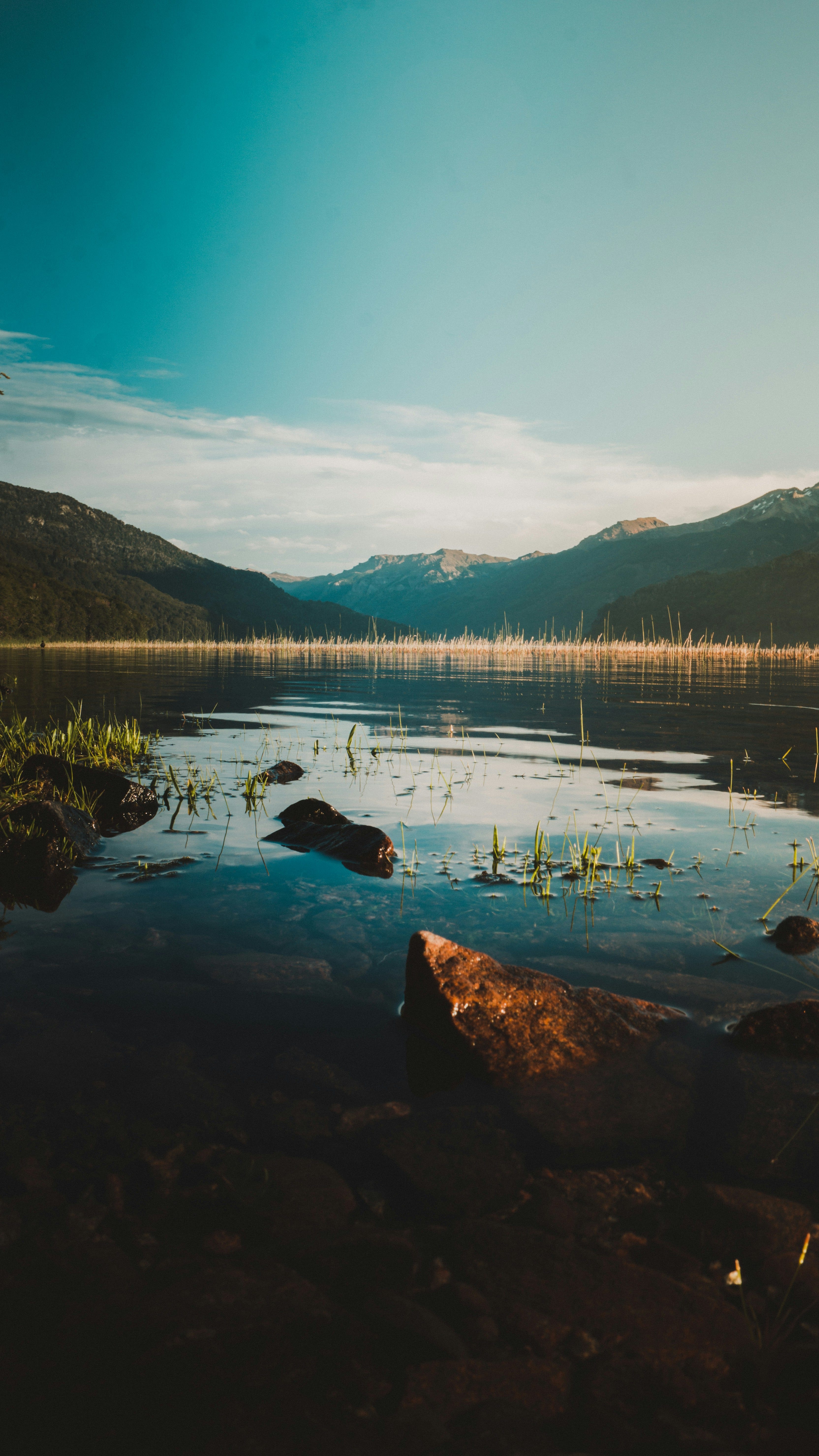
Photo: Cristian Asame - Unsplash
These days it feels hard to find a safe place to rest your eyes and nervous system. Turn on the news, and you see repeated footage of the catastrophic flooding and death in Nepal, the war in Iran, discussions of higher gas and food prices, and watch more people suffer. Our world does feel much less stable than it used to.
I’m a sensitive person and find my nervous system needs more tending these days. I know that morning meditation is needed to start the day calmly, and my regular exercise program. But what do I reach for the most? It’s gratitude.
"Let gratitude be your pillow upon which you kneel
to say your nightly prayer."
– Maya Angelou, poet, civil rights activist, 1928-2014
You might wonder why I’m talking about gratitude at a time like this, but it’s exactly the right time to be grateful for every little thing in your life.
I’ve been here before — not this exact crisis, but one with far higher stakes.
When I was in a near-fatal car wreck in Baja, Mexico, in 2017, I experienced something I still don’t fully have words for during my third abdominal surgery. I had a near-death experience that was in a place of pure consciousness, in a black void between worlds, with no awareness of my body, hearing and answering not with my voice but telepathically. In that place, I was asked by what I believe was a spiritual guide how I chose to go through what was happening to me. And from somewhere that wasn’t my fear, wasn’t my ego (it was my higher Self), I answered: I don’t want to be a victim. I’ll take the high road and choose love and gratitude to heal.
I didn’t have control over the accident. I don’t have control over war, or the climate, or the price of food, either.
But I’ve learned that control was never really the thing gratitude was offering me in the first place.
Gerontologist Dr. Lydia Manning spent years interviewing people in their 70s, 80s, and 90s — people who’d survived illness, loss, grief, the accumulated weight of a long life — trying to understand what let some of them thrive while others were crushed by the very same hardships. What she found wasn’t toughness, and it wasn’t optimism. It was transformation.
The most resilient people weren’t just surviving what happened to them — they were being changed by it, and gratitude ran through nearly every one of their stories as a thread holding them together.
Ruth, one of the women in Manning’s research, put it simply after her husband died: “If I didn’t have my faith, the things that have happened to me — I don’t know what I would do without it… there are too many unusual things.” She wasn’t grateful because everything was fine. She was grateful in spite of everything not being fine — which turns out to be exactly the point.
Neuroscientist Glenn Fox has spent his career studying what gratitude actually does inside the brain. In one striking study, he and his colleagues played recordings for people in an fMRI scanner — testimony from Holocaust survivors describing moments when a stranger helped them at real risk to themselves, in the middle of unimaginable danger.
The feelings of gratitude those stories evoked lit up brain regions tied to stress relief, moral judgment, and human bonding.
This wasn’t gratitude for a sunny day. This was gratitude discovered in the middle of the worst that people can do to each other — and it still worked.
That’s the gratitude I want to talk about today. Not the easy kind, for when life is going well. The kind that shows up anyway, in a world that’s genuinely on fire in more ways than one.
Here’s what I don’t mean by any of this: I’m not saying pretend the war isn’t happening, or that prices aren’t higher, or that the climate isn’t a real and serious threat. Being grateful for what you have in your life doesn’t ask you to stop caring, stop paying attention, or stop trying to make things better.
Gratitude changes your nervous system’s relationship to the parts you cannot control today — so you’re not living in a constant state of bracing.
Fox has a phrase for what develops with practice: HD gratitude — a higher-resolution, more finely tuned way of noticing. Not just the big, obvious things, but the small ones that are often overlooked when your attention is focused on everything that’s wrong. The neighbor who waved. The bed you slept in last night. The friend who texted “thinking of you” for no reason at all. You don’t have to fix the whole world today.
Find one true thing — your favorite cup of tea, the flowers you picked yesterday in a vase you find beautiful.
You just have to find the one true thing you’re grateful for, right now, in the middle of everything you can’t control. That’s not denial. That’s the high road — and it’s still available to you, even here, even now.
If this post gave you clarity or a new perspective, consider sharing it with someone who might find it helpful, and tap ❤️ or 🔁 to help more people discover it on Substack. Thank you!
XO, Sherold
What do you do to regulate your nervous system when the world feels crazy? I’d love to know.
If this resonated, the articles that started my Unbreakable series are here → What Makes Some People Unbreakable and What Unbreakable People Know About Themselves.