


Photo by Giulia Bertelli on Unsplash
Hello my friend, I want you to know that I’ve been locked out of Substack for a week! This is why you haven’t heard from me. However, I think the Universe wanted me to have a week off. What’s interesting is that I traveled to Spain to join my husband for ten days. John and nine guy friends, cycled from Malaga, Spain to Seville in eight days. Then I joined him. I’m amazed that he still does this in his late 70s. Last year he was in France.
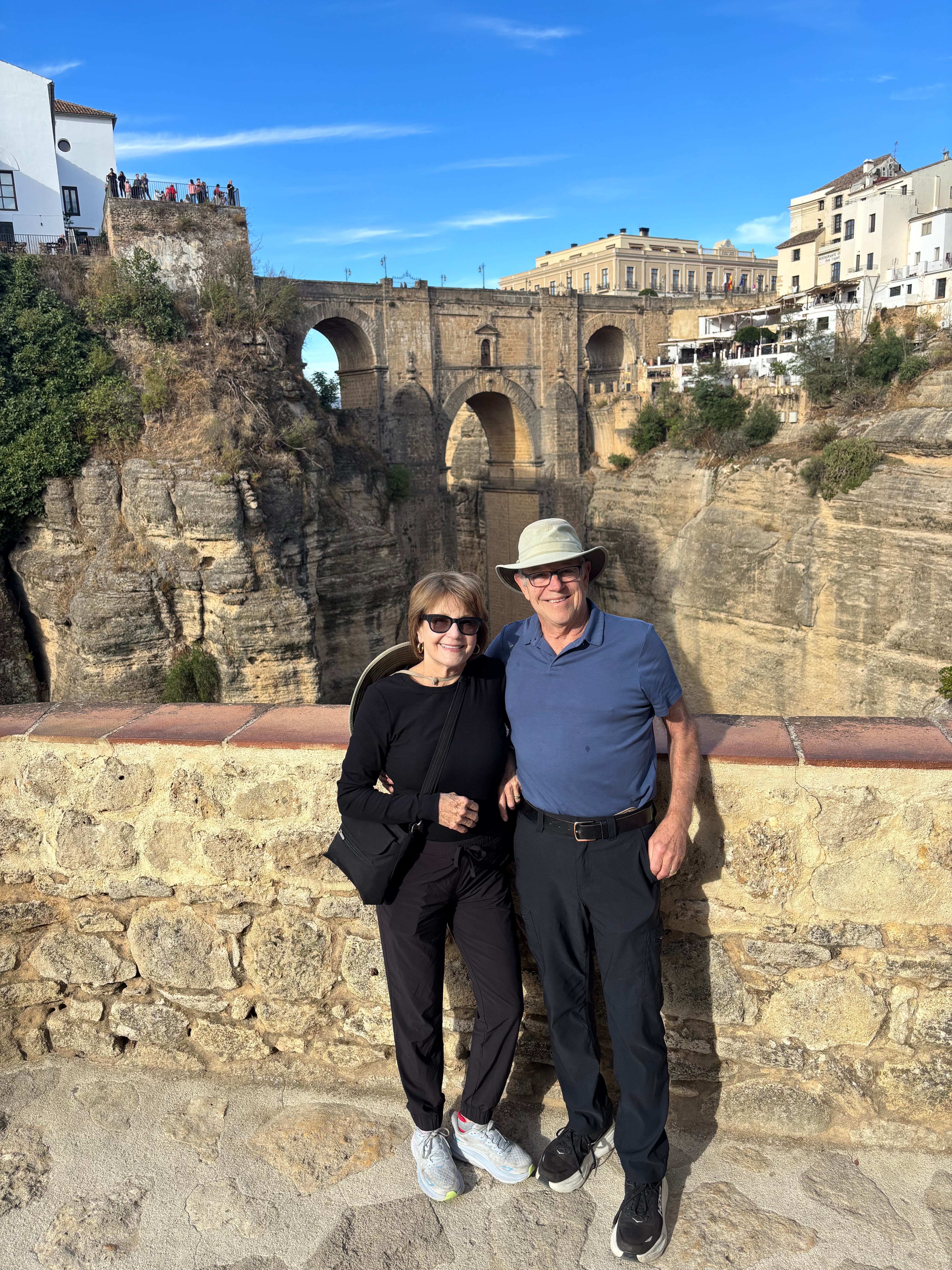
We’re heading back home in a few days. One of the things I love about European cities is that everyone comes out at night to get together, talk or walk around the city. We have walked all over the cities of Madrid, Ronda, Cordoba, and Seville. I especially love to see how other cultures live. It seems they’re much more relaxed than people in the U.S.


Please help others find this publication on Substack by hitting the ❤️ or 🔁 at the top or bottom. Thank you.
The 20-Second Practice That Calms Your Stress Response
Growing up, if I complained about something, my mother would call me “poor pitiful Petunia.” Pitiful was also the word she used for anyone she felt sorry for. It was a word I never wanted to be associated with.
So I understand why no one wants to admit they feel sorry for themselves. Poor me. Why does this happen to me?
Self-pity says, “Why me?” Self-compassion says, “This is hard, and I’m not the only one who has felt this.”
In the hospital after my car wreck, during a surgery and near-death experience, my spiritual guide telepathically asked me a question:
“You get to choose how you go through this. What will you choose?”
I telepathically answered: I don’t want to be a victim. I’ll take the high road and use love and gratitude to heal. That’s what I did.
Self-compassion is part of how I’ve kept that promise. By the end of this post, you’ll have a 20-second practice to try.
Each of us has an inner critic that can be harsh at times. This is the voice in the head that you believe is you. Actually, you are not the voice in your head. That is the voice of your ego.
When you notice what you’re thinking, who is doing the noticing? That’s your observer, your higher Self.
Self-compassionate people still have an inner critic. But they’re mindful of what they’re thinking and have learned to act with self-compassion.
What happens in your body.
When your inner critic is active, it taps into the body’s threat defense system and releases stress hormones like cortisol and adrenaline.
In our society today, we’re not afraid of being eaten by a tiger, but we have this inner critic that gains power when you believe what it says. This is the voice of the ego, which can keep you playing small in your life.
Psychologist Paul Gilbert, founder of compassion-focused therapy, describes three emotion systems:
• Threat (protection and survival)
• Drive (achieving and striving)
• Soothing (safety, calm, and care)
Gilbert says that many of us live in threat and drive, and when something stops our striving, we turn self-critical and slide back into threat.
His work focuses on how to shift people from the threat system into the soothing, caring system. He wanted to help people learn to be kind to themselves.
For me, mind awareness is key. The first step is to detoxify the trauma.
After I was in the car wreck in Mexico, I had to learn to be compassionate with myself anytime I was a passenger in a car — especially when my husband was driving. I learned to tap on my chest and do EFT when riding in a car. Then I decided that it was more compassionate to become the driver instead of the passenger with my husband. Tapping helped when I couldn’t choose. Driving helped when I could. I feel much more empowered.
Compassion is focused on developing courage and wisdom to engage with your trauma and gradually heal it. You’re helping your body to support your mind.
Self-compassion is one antidote to a harsh inner critic.
Compassion is linked to the mammalian care system. When you feel inadequate and then are compassionate with yourself, you’ll feel safer and more cared for. When this care system is activated, oxytocin (love hormone) and endorphins (feel-good hormones) are released.
Compassion is about the wisdom and courage to address suffering.
The strongest compassion is when you help people you don’t know. It’s the deep sensitivity to address suffering. Life is full of tragedies and suffering. This is a way to get through it.
But what’s the difference in self-compassion and self-pity?
Dr. Kristin Neff is clear about separating self-compassion and self-pity. When you are in a state of self-pity, you get absorbed in your own problems and feel cut off from everyone else.
Self-compassion remembers that suffering and imperfection are part of being human, and it holds the feeling in balance, neither pushing it down nor getting swept away by it.
Try this 20-second practice
In a 2021 randomized trial, people who practiced giving themselves a soothing touch - hand over the heart - for 20 seconds before a stressful test, had lower cortisol than the control group. Their cortisol returned to normal faster. No one knows yet whether it’s the touch, the breathing, or the warmth that makes the difference, so see what works for you.
Soothing touch is one way to help activate the compassion response.
Experiment with the following touch responses to see which of these helps you feel calm and soothed.
Try to do this in a place where you can close your eyes and have privacy.
• Put one or two hands over your heart and feel the warmth of your hands.
• Cup one hand over a fist over your heart.
• Put one hand on your heart and one on your belly.
• Cup your hands in your lap.
• Gently stroke your arms.
The goal is to give yourself a dose of self-compassion to comfort yourself when times are difficult.
If soothing touch doesn’t work for you, try petting an animal if you have one, or hold a soft pillow.
Use this practice at a time when you typically feel nervous - before a doctor appointment, a test or a difficult conversation. Most of all, use it when you catch yourself on autopilot, listening to your inner critic.
XO,
Sherold