
The Chair Didn't Care How I Felt About It
What a broken sacrum and a hospital whiteboard taught me about finding meaning in tragedy — and why not everyone can.

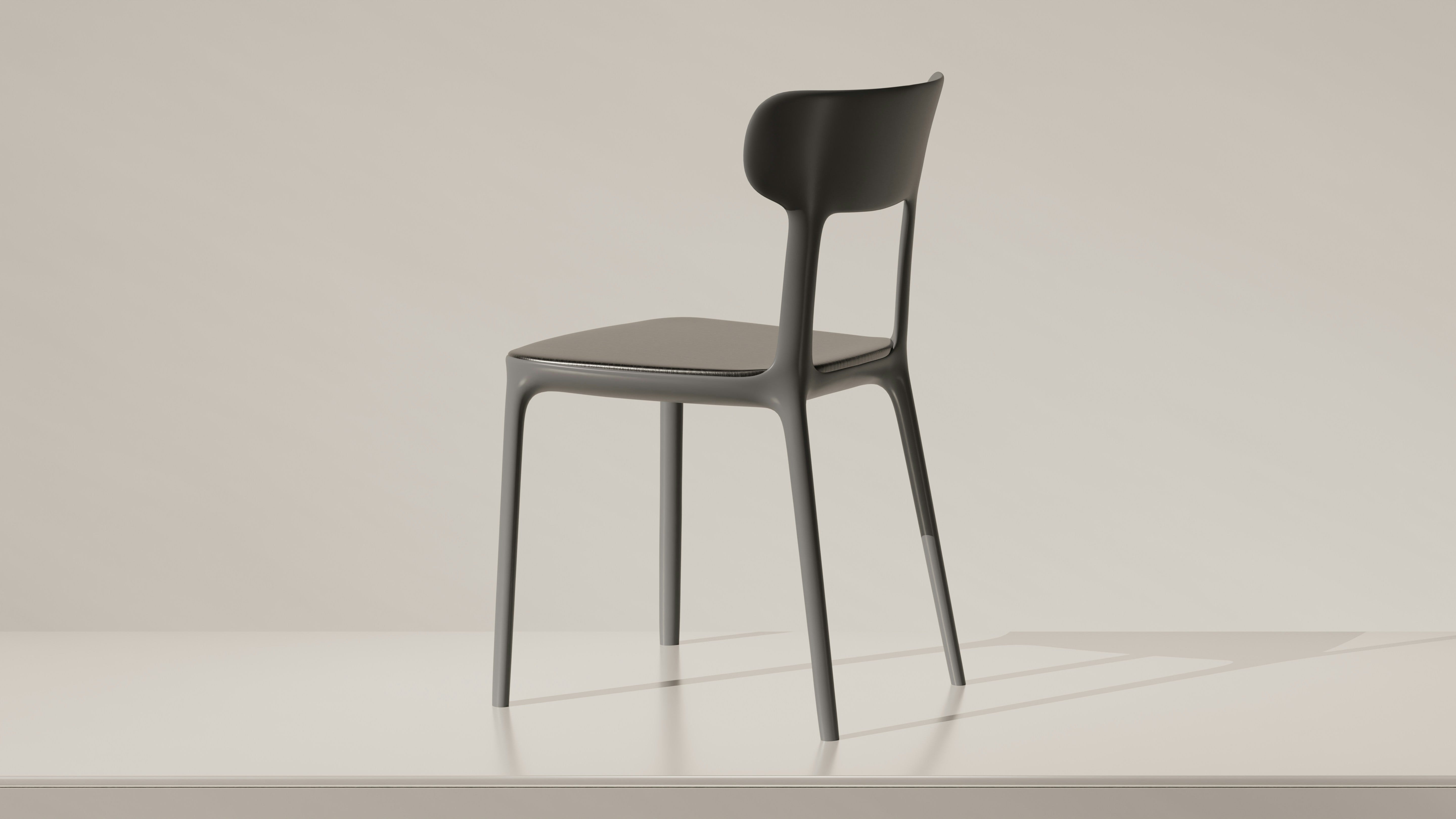
photo credit: UnSplash / ObjectType RAW
Hello friend — it’s summer in Oregon. Teddy, our labradoodle, had knee surgery seven weeks ago and is fully recovered now. We just got back from camping off the grid in Bambi, our 19-foot Airstream, out in the high desert of Oregon — Teddy came along too.
I grew up camping in the Smoky Mountains of Tennessee and never lost the desire to be in nature. I find it healing. I hope you’re enjoying whatever season of life you’re in right now.
The Chair Didn’t Care How I Felt About It
Some of us find our way to meaning through insight. I found mine one unbearable minute at a time in a chair.
There was a whiteboard across from my hospital bed. My trauma surgeon’s name was written at the top in thick black marker, with the nurses and aides listed below it. In all caps, it said: FALL RISK.
I hated looking at that whiteboard. I would have much rather had my bed turned toward the window, toward the ocean. But I learned something in that room, lying there after five surgeries in fifteen days: if I let my mind argue with what was actually in front of me, the whiteboard would win, and I’d lose every single time.
Every day, my surgeon added a new goal to the whiteboard. One of them was a chair.
It sat across from my bed — nothing special, just a chair. But it was a larger chair than the usual visitor chairs in patient rooms. My trauma surgeon’s orders on the whiteboard were for me to sit in the chair for thirty minutes at lunch.
Sitting in it, with a fractured sacrum, felt like lowering myself onto broken shards of glass. The first time, I lasted about a minute before I was crying. The nurses helped me back to bed without a word. The next day, I asked them if they could pad it. They brought all kinds of padding to make it softer. It didn’t help. I could only sit for a minute or two at the most.
I didn’t have a revelation in that chair.
I didn’t find the meaning of my accident sitting in it. What I found was much smaller, and it was much more useful:
I could show up for it anyway.
I could sit as long as I could stand it, cry through it, and ask the nurses to help me up when I truly couldn’t take another second — and then do it again tomorrow. The chair didn’t care whether I’d made peace with my situation. It was just there, waiting, whether I had or not.
I think this is where a lot of writing about meaning and tragedy gets it wrong.
It makes reframing sound like a switch you flip — as if the right mindset, or the right amount of gratitude, should be available to anyone, the moment tragedy strikes. And when it isn’t available — when someone is only able to feel the broken glass and nothing else — the quiet implication is that they’re doing grief wrong.
I don’t believe that. I think some of us find our way to meaning because we have the tools already in hand when we need them — a practice, a community, a person who calls at exactly the right moment and says the one sentence that unlocks something.
I found mine because my sister said the words our father used to say to us when we were girls.
When she reminded me of what Dad had drilled into us, my whole body started shaking uncontrollably because it recognized the truth before my mind did.
I had tucked this belief in my subconscious, but my body knew the truth.
That wasn’t strength. That was luck, and timing, and a family history I happened to have access to.
Some people don’t have that call waiting for them. Some people are sitting in the chair with nothing underneath them at all. That isn’t a character flaw. It’s just a harder version of the same room.
What I can say, from the far side of it, is that meaning didn’t arrive for me as an idea. It arrived as a chair I sat in anyway, a whiteboard I stopped fighting, a hallway I walked one foot further each day.
If you’re in a season where meaning feels like something other people have and you don’t, I don’t think the answer is to think harder about your situation.
I think it’s to find the smallest physical thing you can do today that doesn’t require you to have already made peace with anything — and do that.
The peace, if it comes, tends to show up after, not before.
After going through a near-death experience, I didn’t want to be a victim of the accident. I want to be honest that I didn’t choose that in a single moment of clarity. I chose it one minute at a time, in a chair that felt like broken glass, long before I understood why.
Has there been a “chair” in your own life — something you had to show up for before you understood why? I’d love to hear about it.
With love, Sherold
P.S. Join us.
Each month, paid subscribers gather live for a community conversation on resilience, on using fear as rocket fuel instead of a brake, and on whatever’s alive for the group that month. For the past three months, we’ve been working through a 100-Day Visualization Project together — we’ll complete it this month. I’ll continue mine for another 100 days with anyone who wants to keep going.
These gatherings aren’t an extra cost — they’re included in your subscription, not something I charge for separately. For just $50/year — that’s about $4.17/month, less than the monthly rate — you get a live community built around actually doing the work, not just reading about it. (Prefer to pay monthly instead? That’s $5/month.)
I’d love to have you there. [Subscribe as a paid member below] to join us at the next gathering.