

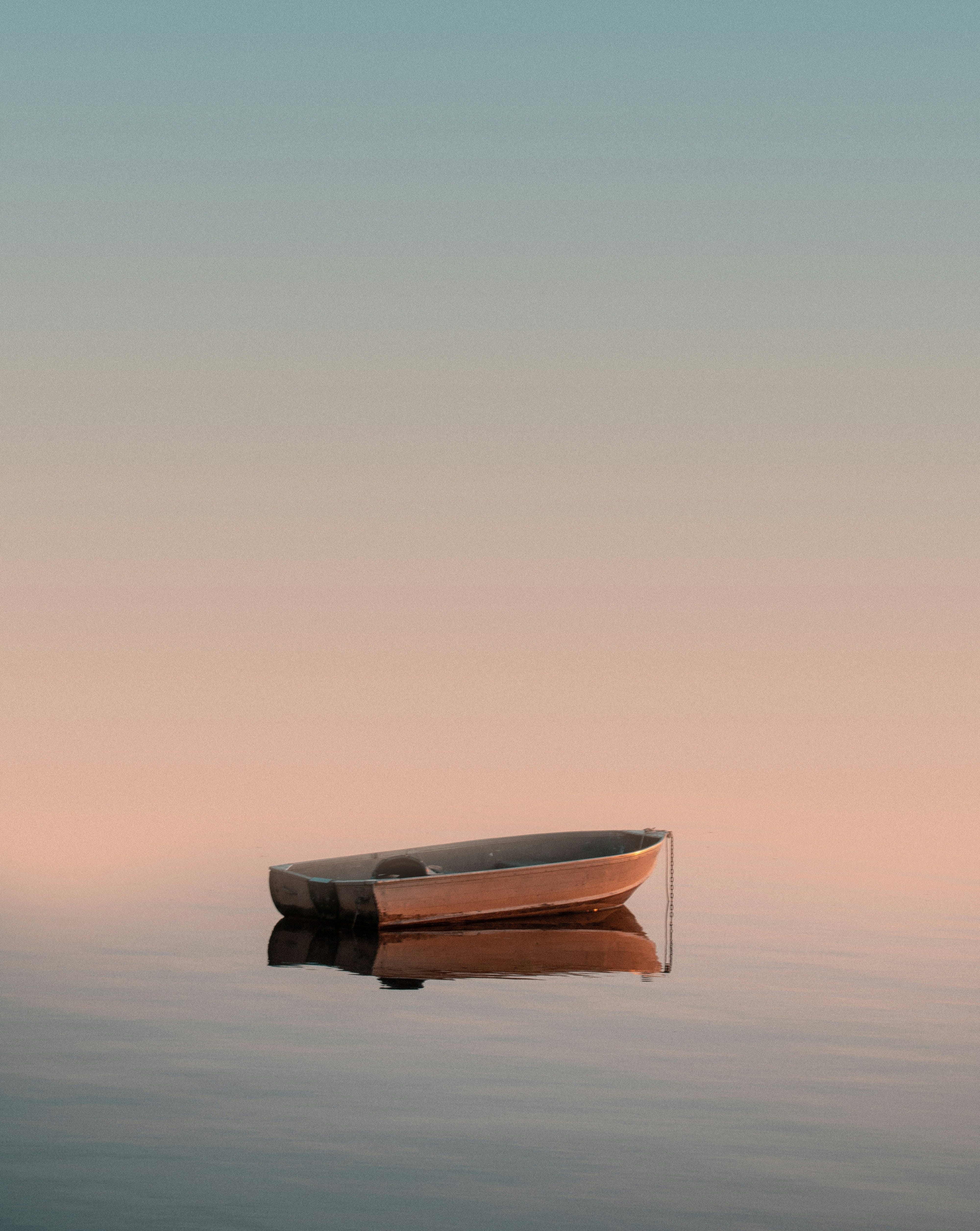
Photo by Lucas Kohoko on Unsplash
Part 3 in the Unbreakable Series
Last month, I promised you something. I said there is a part of you that was never broken to begin with — and that it has a name. This week I want to tell you what it is.
Before the near-fatal accident I survived in 2017, I went through two unimaginable traumas and came out the other side traumatized but inspired to thrive. When my youngest brother, Byron, was killed in 2005 (it’s a 21-year cold case in Knoxville, TN), I knew that his death had meaning for me, but I got involved in the case trying to help keep it alive. I didn’t realize I was in prison in my mind suffering, while the perpetrator was free. I was in a Byron Katie intensive that weekend and set myself free. I had a Jungian analyst I worked with during this tragedy and for the next decade. This suffering set me on the path of personal growth. I turned toward my higher power for faith and guidance.
Then in 2012, when my son landed in the ER at age 28 with a health condition that was later diagnosed as a rare genetic disease that needed immediate medical interventions, I was on my knees again going through what all parents call “the unimaginable.” I found a calm place inside me that guided me. An acquaintance once told me she thought it was weird that I was so calm.
I have been in the void between life and death.
During my third abdominal surgery at Sharp Memorial Hospital in San Diego, the anesthesia came, I went under, and I found myself somewhere that had no edges, no floor, no ceiling, no wall to reach for. I had nobody. I noticed this without alarm — the way you might notice in a dream that the rules have changed.
And what I found there was not nothing.
What I found was pure love. Pure peace. Pure awareness. No fear. No story about who I was or what I had failed to be. No past to defend and no future to manage. Just — this. Vast space that was alive with spirit, abounding love, unhurried, completely at home with itself.
That was the Self.
Not something I achieved. Not something I earned through decades of spiritual practice. Something I simply was, when everything else was finally quiet enough to let it through.
I came back from that experience changed in a way I am still learning to describe. It’s hard to use our language to describe this liminal space. But the most important thing it showed me was this: underneath everything I had constructed — the businesses, the self-sufficiency, the belief that I had to earn my place — something was there that had never needed any of it. Something whole. Something that could not be broken because it had never been in danger.
Carl Jung spent his entire career trying to name this.
He called it the Self — always with a capital S — and he distinguished it carefully from the ego.
The ego is the small self. The constructed self. The accumulated identity built from childhood wounds, small ‘t’ traumas, social roles, survival strategies, and the stories we tell about who we are and what we deserve. The stories we spend our entire adult life suffering from.
The Self is something else entirely. Jung described it as the totality of the whole psyche — not just the conscious mind, but the vast depths beneath it, the organizing intelligence that is trying to move us toward wholeness whether we cooperate or not.
And here is what Jung said that stopped me completely the first time I read it:
At its deepest level, the Self is indistinguishable from the image of God within us.
It is our point of contact with the divine. What we call God and what we call the deepest Self are, in the end, the same encounter.
Jungian psychologist Edward Edinger put it this way: psychological development in all its phases is a redemptive process — the goal is to redeem, by conscious realization, the hidden Self that lies buried beneath our unconscious identification with the ego.
The ego is like a small island in the middle of an enormous ocean. We mistake the island for the whole thing. But the ocean was always there.
Every great tradition has known this. They simply use different words.
Hinduism calls it Atman — the eternal, unchanging essence of the person, which the Vedantic teaching says is ultimately identical with Brahman, the divine ground of all existence. The individual Self and the cosmic All are one and the same.
Sufism calls it the Ruh — the spirit or higher divine dimension of the person. The Sufi path aims at fana, the dissolution of the ego, followed by baqa, subsisting in God. The mystic Rumi spent his whole life writing about this dissolving — this losing of the small self into something vast and loving.
Christian mysticism calls it the Seelenfünklein — the little spark of the soul, the ground of the soul, the deepest center of the person where, in Meister Eckhart’s words, the soul and God are one. His teaching: to be full of God, one must be empty of self.
David Hawkins, whose Map of Consciousness I have studied for years, places the Self at the very highest levels — pure love at 500, joy at 540, peace at 600. These are not states we achieve through effort. They are what we find when we stop blocking them.
Different rivers. The same ocean.
The theologian Schleiermacher described higher consciousness as the part of the human being capable of transcending animal instincts — the point of contact with God. When this consciousness is present, he said, people are not alienated from God by their instincts.
Transpersonal psychologists — those who study the highest reaches of human experience — have found something consistent across thousands of research subjects:
The process of deepening connection with the Self engenders the highest human qualities. Creativity. Compassion. Selflessness. Wisdom.
These are not qualities we build or earn. They are what we find when we stop blocking them.
Psychologist Steve Taylor, who has studied awakening experiences for nearly twenty years, found that even brief encounters with this deeper awareness produce lasting effects — increased trust in life, confidence, optimism, a reorientation toward what actually matters. Many people described the experience as the most significant moment of their lives.
I certainly see my life as before the NDE, I chased the American Dream to be happy and successful. After the NDE, I found what I’d been searching for that was inside me all the time - my higher Self. And a deepening of my relationship with the God of my understanding. A rich inner life.
I was not looking for mine. It found me on an operating table in San Diego.
So what does this mean practically? What does it mean for a Tuesday afternoon when you are afraid, or grieving, or exhausted, or wondering if you have what it takes to keep going?
It means this: the frightened part of you is not the whole of you.
When one of my afraid parts rises up — the old familiar feeling of not being enough, the worry that spirals, the grief that arrives without warning — I don’t argue with it or push it away. I turn toward it from the Self. I let the calm, witnessing part of me speak to the frightened part.
Self: I see you. I know you’re scared. I’ve got you. You don’t have to carry this alone.
My higher Self has become my inner mentor. The Self is the part that can hold your frightened parts without being swept away by them. The part that can be present with pain without becoming the pain. It is not something you have to create or earn or travel somewhere to find.
The Self is what you already are when the noise quiets down.
I want to leave you with something to carry into this week:
The next time fear rises, or grief, or the low-grade exhaustion of a long life with hard things in it — pause before you react. Just for a breath. And ask:
Who is watching this? Who is noticing the fear?
That noticing — that quiet witness that is aware of the fear without being consumed by it — that is the Self. That is the part that was never broken. That is what every tradition has been pointing toward for thousands of years.
You don’t have to earn your way there. You don’t have to be further along than you are. You don’t have to have had a near-death experience or a dramatic spiritual awakening.
You just have to be willing to be still long enough to notice what was always already here.
The high road is not a road to the Self. It is a road walked from it.
Have you experienced this quiet, peaceful place of knowing? I’d love to hear about your thoughts.
THE UNBREAKABLE SELF
A New Course with Sherold Barr — Coming Summer 2026
Join the Waitlist - sign up here
Be the first to know when enrollment opens — and get early access pricing.
What if the hard things were showing you something all along?
Most people spend their lives trying to recover from what broke them.
But what if nothing ever actually broke you?
Love this. Thank you.
This is really lovely. I especially like the metaphor of being like an island floating in an endless the ocean.