

Hey friend —
I want to tell you about my friend Delayne.
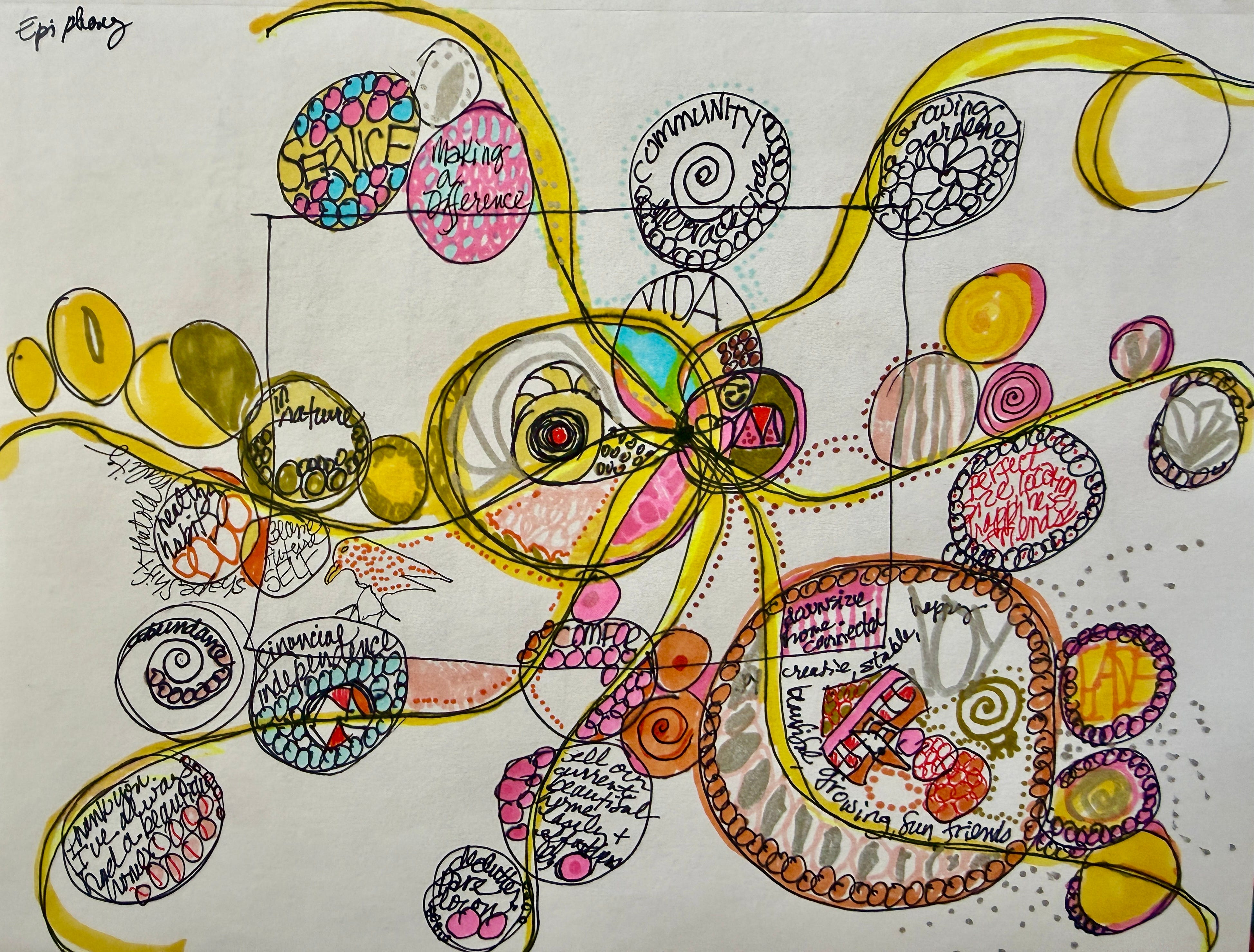
Her house had been on the market for a month. She was getting frustrated, worried, starting to doubt the process. She had been working hard — using Dr. James Doty’s neuroscience-based visualization methods and Colette Baron-Reid’s meditative drawing practice to rewire her brain and get her home sold.
Since January 6, she had been drawing with intention. Bubbles of gratitude. Spirals to expand the frequency. She wrote her goal at the top of the page:
To evolve = the evidence of intention.
“I wanted to write and draw a love note to the Universe,” she told me. “Just looking at it made me feel calmer.”
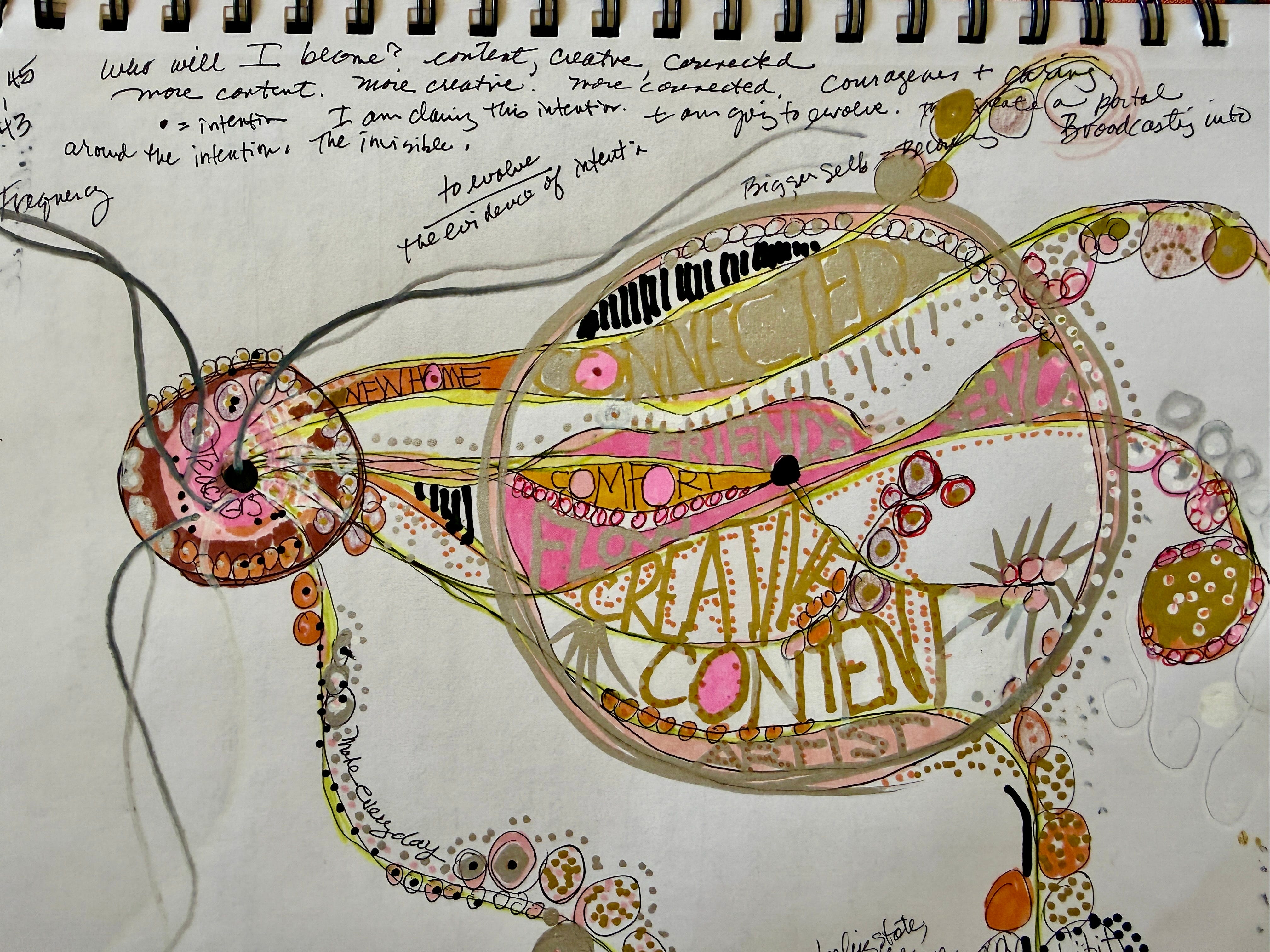
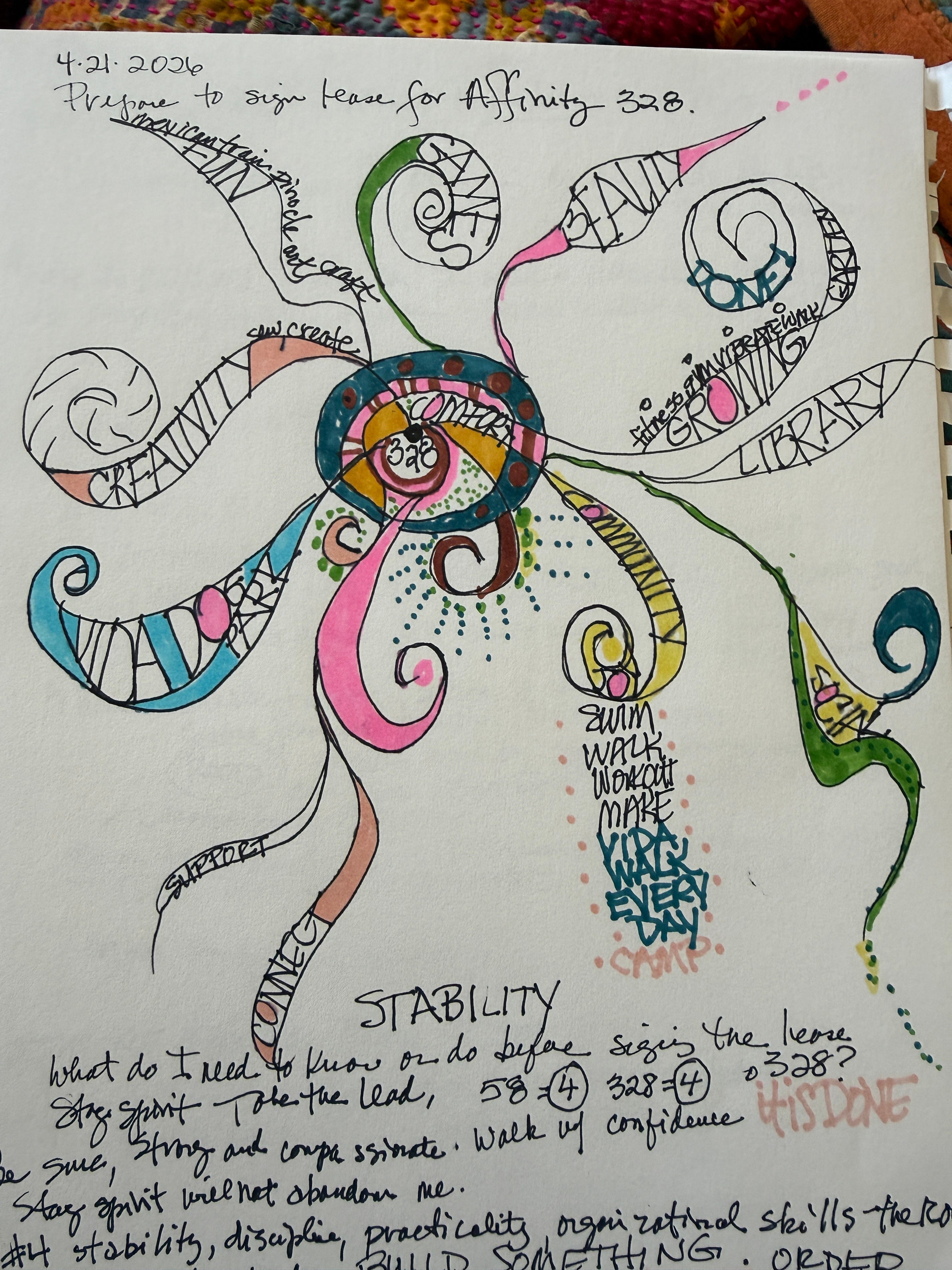
On April 21, a two-bedroom, two-bath apartment became available — number 328, which in numerology is a number of stability. She signed the lease on May 2. Now she was ready to sell the house.
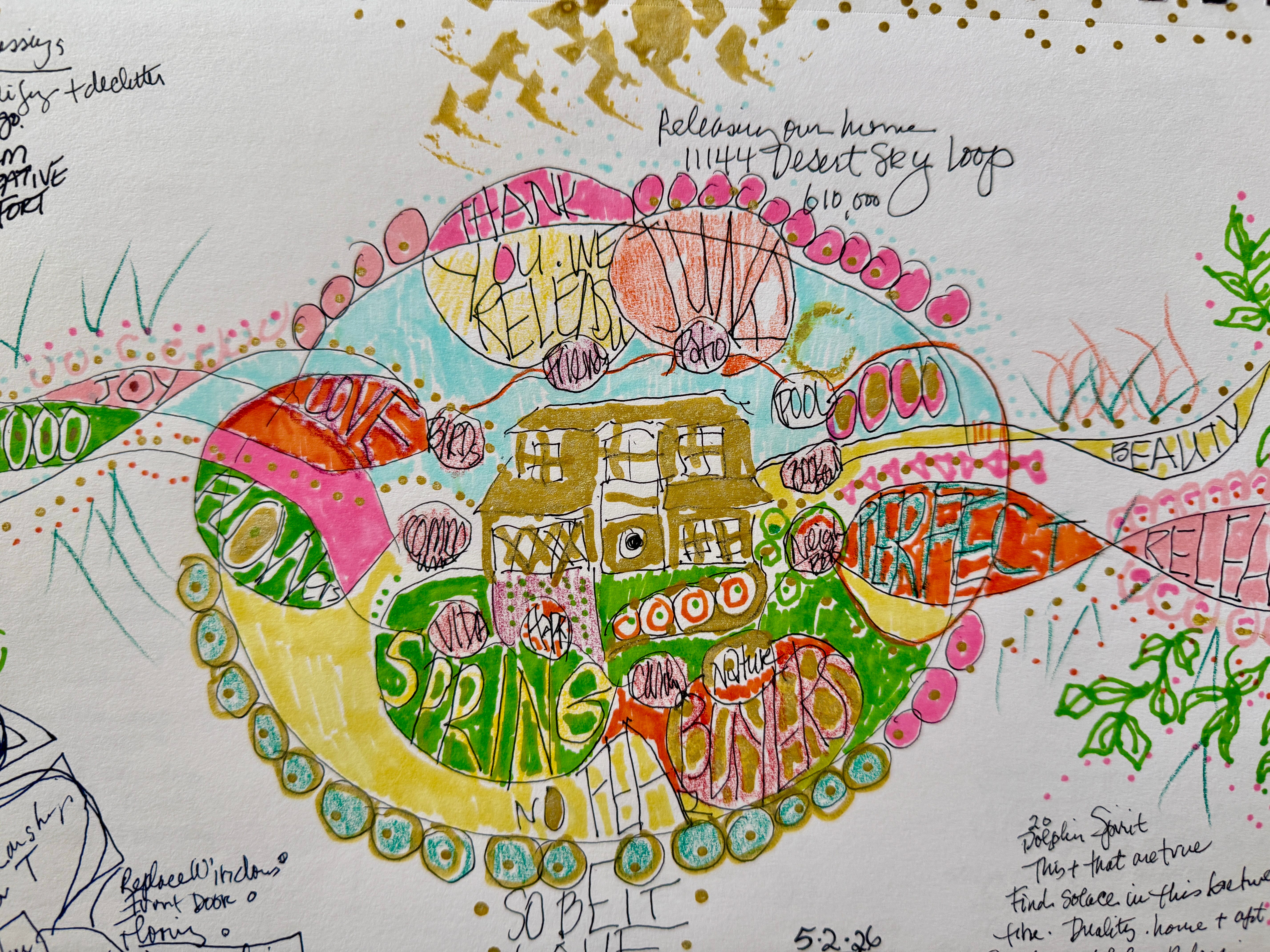
She made a new drawing to release it. Six frequency lines with the house as a portal, gratitude bubbles around the center. She visualized a buyer, thanked them and the house, and let it go.
And then — nothing. A month on the market. No offers.
That’s when I called her.
I told her to try something: stop talking about wanting to sell the house and start talking about it as if it had already happened. Speak in past tense. Feel the relief. Feel the excitement. Let your nervous system experience the outcome before it arrives.
Here’s the text I received from her last week:
“On Sunday 5/10, I spoke with you. You told us to say, ‘We are thrilled our home has sold.’ We have done that. And I took it one step further. I invited my two realtors over and we had a champagne toast: ‘We are thrilled the house has sold!’ On Friday, we got an offer. We countered, they countered back, and we accepted today. It worked! Thank you!”
Five days after the champagne toast, the house sold.
I am not telling you this is magic. I am telling you this is neuroscience.
What your brain is actually doing when you visualize.
Your brain is a prediction machine. It is constantly simulating the future based on past experience, asking: what’s likely to happen next?
When you visualize a desired outcome vividly and emotionally — feeling the relief, the pride, the gratitude as if it has already happened — your brain cannot fully distinguish between what you imagined and what actually occurred.
Research by Pascual-Leone established that mental rehearsal produces structural neural changes comparable to physical practice. The same neural circuits fire whether you are doing something or vividly imagining doing it.
This is why emotionally charged visualization creates stronger neural imprints than detached thinking. Your amygdala and limbic system act like amplifiers — the more emotional weight a goal carries, the more the brain tags it as meaningful and begins orienting toward it.
Here is the key insight behind past tense: when a desired future feels unfamiliar, the brain may not recognize it as relevant even when it is deeply desired.
Visualization familiarizes the brain with the outcome so that when opportunities appear, you notice them. You recognize them. You act.
Delayne’s brain — and her realtors’ brains — had already been to the closing. They had already felt the celebration. When the offer arrived on Friday, it wasn’t foreign. It was familiar. Expected, even.
James Doty, neurosurgeon and founding director of Stanford’s Center for Compassion and Altruism Research and Education, recommends visualizing your intention for five minutes daily, writing it down, and repeating it out loud. Repetition is key — it is one of the primary ways new neural pathways are created in the brain.
Write it in past tense. Feel it as if it’s done. Let your nervous system experience the future you’re building.
And if you have a friend and a bottle of champagne — even better.
What this means for your 100-Day Visualization Project
This is exactly what we are practicing together on June 2 in our Zoom Gathering for paid subscribers. To join as a paid subscriber, the link is below.
I want to coach anyone who is hitting a wall — because there is always a thought or a fear that shows up when you go for something that matters. That is not a sign to stop. That is the sign that you are close to something real.
Not wishful thinking. Not positive affirmations pasted on a mirror. A deliberate daily practice of familiarizing your brain with the outcome you are moving toward — so that when the path appears, you recognize it.
My own update: I haven’t written in my visualization journal every single day. But I’ve picked it back up and kept going. I have written two of the four memoir chapters I wanted to complete by July 31st finished and in revision. I might actually be ahead of schedule.
Progress, not perfection. That’s the whole point.
Join me Tuesday, June 2 at our Zoom Gathering on the High Road.
If you’d like to become a paid subscriber, it’s only $5 a month or $50 annually.
I offer you monthly workshops on topics that will keep you on the high road - a path in life that is filled with courage, consciousness, expansion, gratitude and wisdom.
You can sign up now and I’ll send you the materials from our first Gathering. We’ll meet on June 2 and once again in July to stay on track.
Come as you are. Bring your wins and your struggles. Both are welcome.
Tuesday, June 2 / 1 – 2:15 pm PT / 2 – 3:15 pm MT / 3 – 4:15 pm CT / 4 – 5:15 pm ET / 9 – 10:15 pm GMT
This Gathering is for paid subscribers. Not yet a member of the inner circle? Join us for $5/month or $50/year — less than a dollar a week. I’ll send paid subscribers the Zoom link.
I’ll see you on the high road. — Sherold
I’d love to hear if you have tried this technique. Please leave me a comment or click the heart on the post to help people find me.
To subscribe - fill in your name below and click the monthly or annual membership to take part in my monthly workshops on Zoom.